How Dividends Work
When a company generates more profit than it needs to reinvest in growth, it can return the excess to shareholders as dividends. Dividends are typically paid quarterly in the US (though some pay monthly or annually). You receive cash payments into your brokerage account proportional to the number of shares you own.
Key dates: the declaration date (company announces the dividend), ex-dividend date (you must own shares before this date to receive the dividend), record date (company records eligible shareholders), and payment date (dividend is deposited).
Yield vs Payout Ratio
Dividend yield = annual dividend per share ÷ share price. A stock paying $3/year in dividends and trading at $75 has a 4% yield. Be cautious of unusually high yields (7%+) — they often reflect a falling share price rather than a generous dividend, and may signal an impending dividend cut.
Payout ratio = dividends paid ÷ net earnings (or free cash flow). This measures sustainability. A payout ratio of 40% means the company pays out 40% of earnings as dividends and retains 60% for growth. A ratio above 80–90% leaves little margin for error — an earnings dip could force a dividend cut. A ratio above 100% means the company is paying more in dividends than it earns, which is unsustainable without borrowing.
Dividend Aristocrats
Dividend aristocrats are S&P 500 companies that have increased their annual dividend for at least 25 consecutive years. This streak through multiple recessions, market crashes, and business cycles is a strong quality signal — it indicates a durable business with consistent profitability and shareholder-friendly management. Examples include Johnson & Johnson, Procter & Gamble, Coca-Cola, and Realty Income.
Dividend kings go further — 50+ consecutive years of increases. These include companies like Colgate-Palmolive and Genuine Parts Company.
Dividend Reinvestment (DRIP)
A Dividend Reinvestment Plan (DRIP) automatically uses your cash dividends to purchase additional shares of the same stock — often fractional shares. This compounds your returns significantly over time: more shares → more dividends → even more shares. Most brokerages offer free automatic DRIP enrollment.
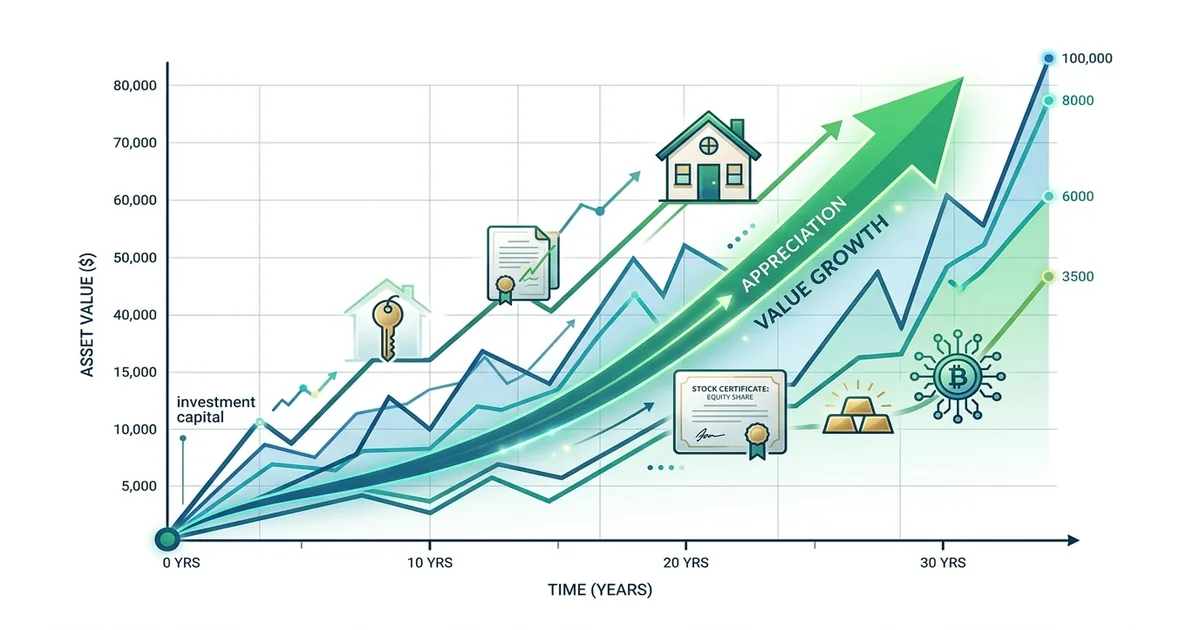
Example: $10,000 invested in a stock with 3.5% yield and 6% annual price appreciation, with dividends reinvested, becomes approximately $53,000 after 20 years — versus $32,000 without reinvestment.
Building a Dividend Portfolio
A diversified dividend portfolio covers multiple sectors — avoid concentrating in one industry. Classic dividend sectors include utilities, consumer staples, healthcare, and real estate investment trusts (REITs). Technology dividends are growing but less established. A balanced dividend portfolio might hold 15–25 individual stocks across 5–8 sectors, or use a dividend-focused ETF (like VYM or SCHD) for instant diversification.
Target a sustainable yield of 3–5% with a payout ratio below 65% across the portfolio. Prioritise companies with dividend growth histories over those with the highest current yield.
Dividends in the UK, India, and Canada
UK: UK dividends have a different tax structure. UK residents have a £500 dividend allowance (2026/27) — dividends above this are taxed at 8.75% (basic rate), 33.75% (higher rate), or 39.35% (additional rate). Holding dividend stocks in an ISA eliminates dividend tax entirely. UK has strong dividend culture — FTSE 100 companies typically have higher yields than US equivalents (3–5% average). HMRC dividend tax at gov.uk/tax-on-dividends.
India: Indian dividends are taxable as income at the investor's marginal rate (post-2020, when DDT was abolished). Stocks held in a Demat account receive dividends directly. Indian market has a lower dividend culture than UK/Australia — most Indian companies retain more earnings for growth. However, PSU (Public Sector Undertaking) stocks often pay strong dividends under government directives. SEBI at sebi.gov.in.
Canada: Canadian "eligible dividends" from Canadian corporations receive the dividend tax credit, making them very tax-efficient in a taxable account — an eligible dividend may be taxed at an effective rate of 5–10% for mid-bracket taxpayers. Dividends in a TFSA are completely tax-free. Canadian banks (Royal Bank, TD, Scotiabank) are famous for stable, growing dividends — popular among Canadian dividend investors. CRA dividend tax info at canada.ca.