How Debt Consolidation Works
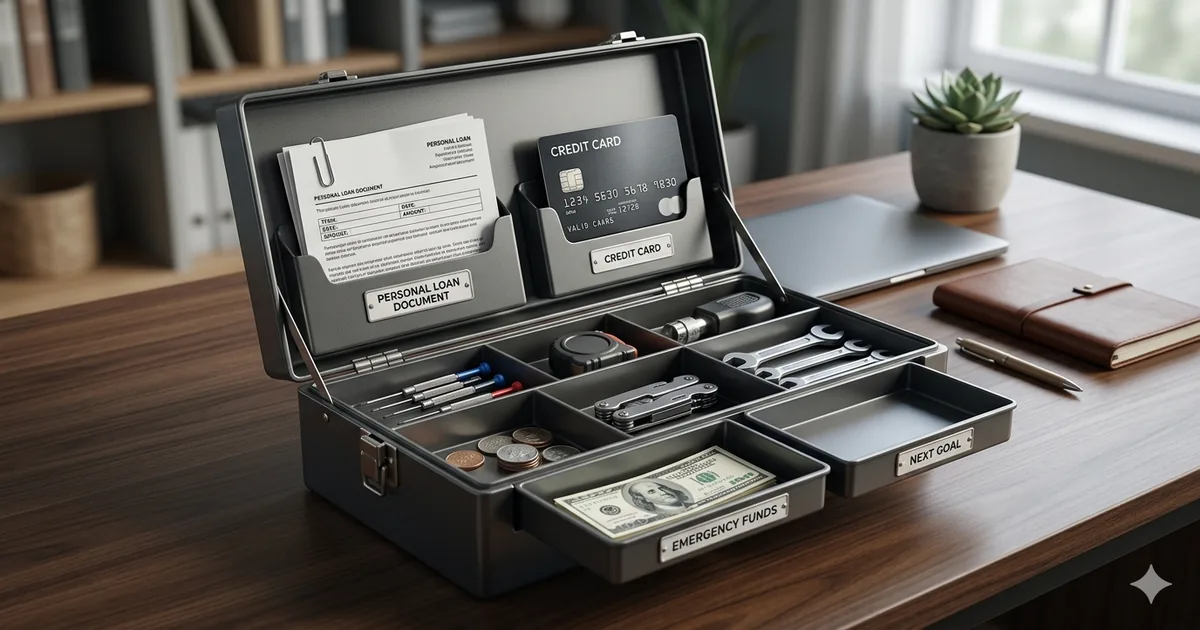
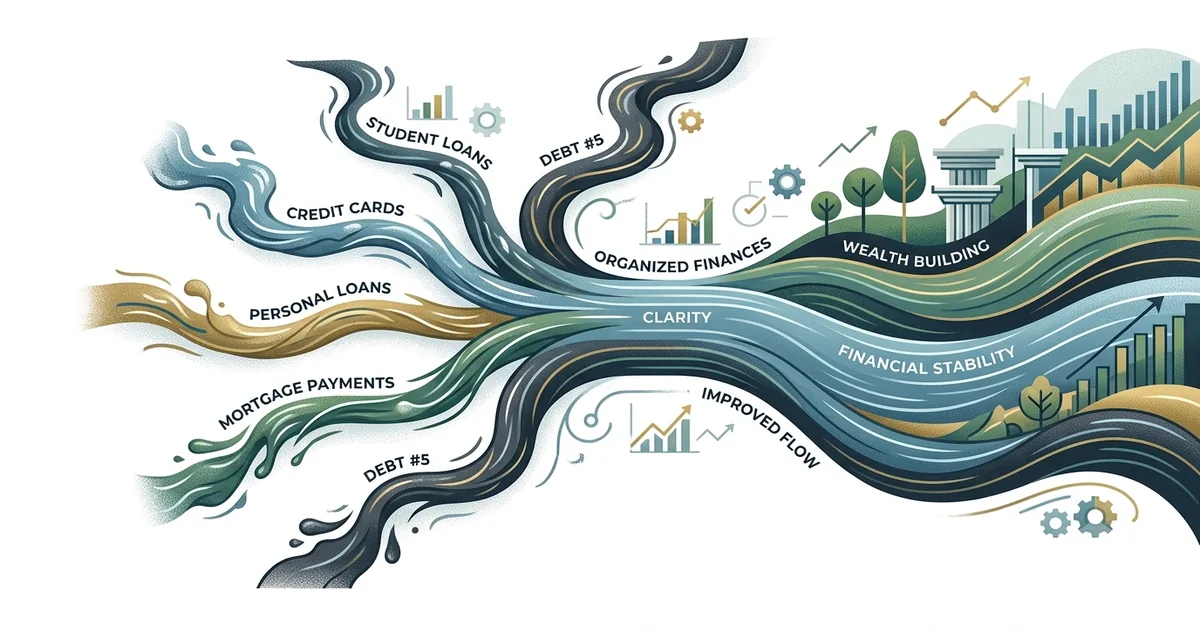
Debt consolidation means taking out a new loan (or using a new credit product) to pay off multiple existing debts, leaving you with a single payment. If the new interest rate is lower than the weighted average rate of your existing debts, you pay less interest over the payoff period. If the new monthly payment is lower, you have more breathing room each month.
It doesn't erase debt — it restructures it. The total principal owed stays the same; what changes is the rate, the term, and the number of creditors you're dealing with.
The Three Main Consolidation Tools
1. Personal consolidation loan. Borrow a fixed amount from a bank, credit union, or online lender at a fixed interest rate and term. Use it to pay off credit cards and other debts, then repay the single loan. Rates for borrowers with good credit (670+) typically range from 8–16%. If your credit card APRs average 22%, a 12% personal loan saves meaningful money. If your cards average 15% and the best loan you qualify for is 18%, consolidation isn't financially beneficial.
2. Balance transfer credit card (0% APR). Transfer high-rate balances to a new card with a 0% introductory APR — typically for 12–21 months. No interest during the promotional period means every payment reduces principal. Transfer fees of 3–5% apply. Requires a credit score of 670+. The critical rule: you must pay off the balance before the 0% period ends, or the remaining balance begins accruing interest at the standard rate (often 25%+).
3. Home equity loan or HELOC. Use equity in your home to secure a loan at a lower rate — home equity loans typically carry rates of 7–9%. Much lower than unsecured debt. The serious risk: you're converting unsecured debt (credit cards, personal loans) to secured debt. If you default, you can lose your home. This option is only appropriate for disciplined borrowers with significant equity and a clear repayment plan.
| Option | Typical Rate | Credit Required | Key Risk |
|---|---|---|---|
| Personal loan | 8–20% | 580+ (best rates 670+) | Origination fee; must beat current average rate |
| Balance transfer card | 0% (intro) then 25%+ | 670+ | Must pay off before promo ends |
| Home equity loan/HELOC | 7–9% | 680+ and 20%+ equity | Home is collateral — default risk |
| Debt Management Plan | ~0–8% (negotiated) | No credit check | Takes 3–5 years; closes accounts |
Source: CFPB. Rates approximate as of May 2026.
When Consolidation Genuinely Helps
- Your new rate is meaningfully lower than your current weighted average rate — saving real money on interest.
- You have a fixed payoff timeline and the new loan term doesn't extend significantly beyond when you'd have paid the debts anyway.
- You'll close or stop using the credit cards that are paid off — removing the temptation to run them back up.
- The simplified single payment reduces the cognitive load and risk of missed payments across multiple accounts.
When It Backfires
Running up paid-off credit cards. This is the most common failure mode. Someone consolidates $15,000 of credit card debt into a personal loan, their cards now have a $0 balance, and within 18 months they've accumulated another $8,000 on the cards — now owing $23,000 instead of $15,000. Consolidation didn't address the spending behaviour that created the debt.
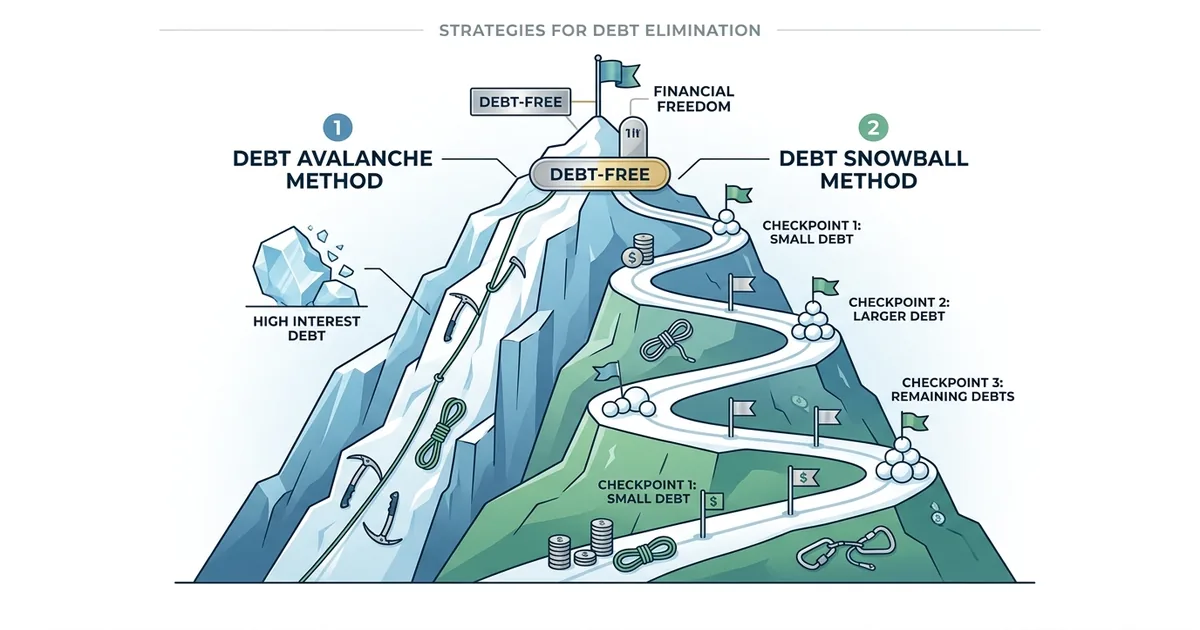
Extending the term too much. A 5-year consolidation loan might have a lower monthly payment than your current minimum payments — but if you were going to pay off the cards in 2 years with the avalanche method, you're extending your debt commitment by 3 years and paying more total interest despite a lower rate.
Not qualifying for a better rate. With a poor credit score, the consolidation loan rate may be equal to or higher than your card rates. In that case, consolidation simplifies payments but doesn't save money — which is only worthwhile if simplicity itself solves a missed-payment problem.
Debt Management Plans — A Different Option
For those who don't qualify for a consolidation loan or 0% balance transfer, a Debt Management Plan (DMP) through a nonprofit credit counselling agency is worth considering. The agency negotiates with your creditors to reduce your interest rates (typically to 0–8%) and you make one monthly payment to the agency, which distributes it to your creditors.
DMPs typically take 3–5 years. Creditors often require accounts to be closed during the DMP. Your credit score may dip initially but improves significantly over the plan period as balances decline. The NFCC (National Foundation for Credit Counseling) is the largest network of nonprofit credit counsellors in the US — find an agency at nfcc.org. Services are typically $0–$50/month.
Debt Consolidation in the UK, India, and Canada
UK: Personal consolidation loans and balance transfer cards are widely available. The FCA requires lenders to assess affordability before lending. Debt Management Plans are available through nonprofit agencies — StepChange is the largest, providing free plans at stepchange.org. Individual Voluntary Arrangements (IVAs) are a formal insolvency option for UK residents with larger debts — different from US bankruptcy but serves a similar function. MoneyHelper guides at moneyhelper.org.uk.
India: Indian banks offer personal loans for debt consolidation, typically at 10–18% APR — still well below credit card rates of 36–42%. Top-up loans on existing personal or home loans are another option. The RBI has directed banks to offer restructuring options to borrowers facing genuine financial stress. The concept of balance transfer exists for home loans and personal loans between banks. Credit counselling through nonprofit agencies is available, though the sector is less developed than in the US or UK. RBI guidance at rbi.org.in.
Canada: Consolidation loans, balance transfers, and HELOCs are all available in Canada. Consumer proposals — a formal legal process allowing you to pay a portion of unsecured debt over up to 5 years — are a powerful option for Canadians with significant debt who want to avoid bankruptcy. Filed through a Licensed Insolvency Trustee, a consumer proposal protects assets while reducing the total amount owed. FCAC at canada.ca.