The 20% Rule — Where It Comes From
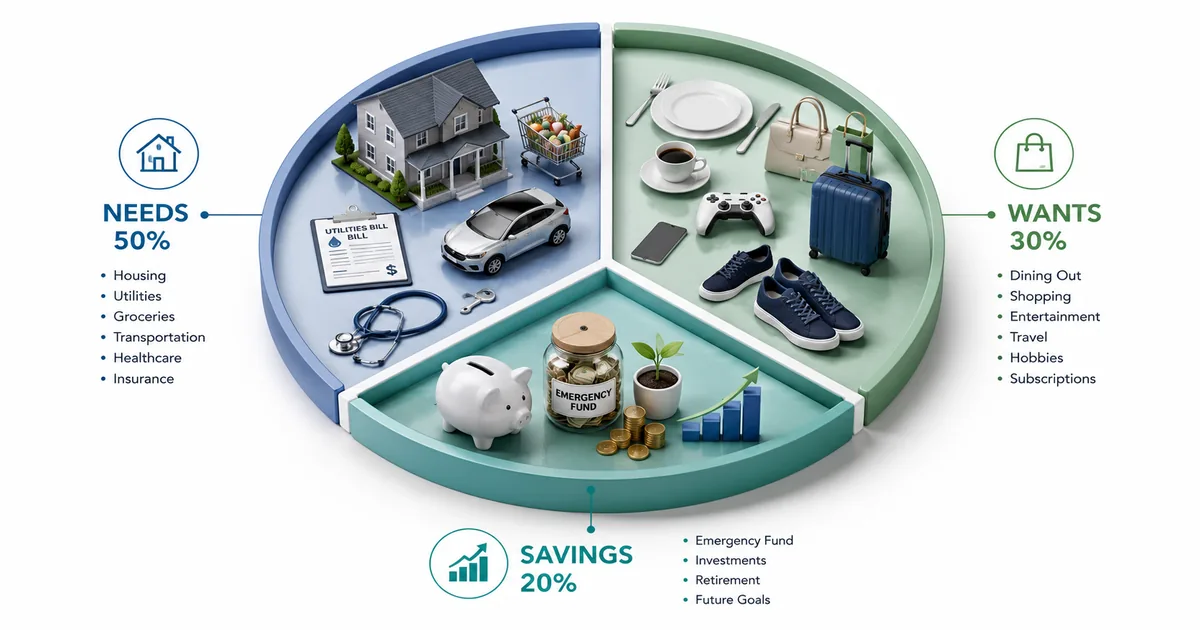
The 20% savings rate comes from multiple sources. It's the savings portion of the 50/30/20 budgeting rule. It's also roughly consistent with what financial planners model as the savings rate needed to replace 70–80% of pre-retirement income by age 65–67, assuming returns of 6–7% annually and a 30–35 year working career.
The 20% is applied to gross income (before taxes) in most planning models. This includes all savings — employer 401(k) match, your 401(k) contributions, IRA contributions, and after-tax savings. It's not just retirement; it's total savings toward all goals.
The rule assumes you start around age 22–25 and save continuously until 65. Every year you start later increases the required rate significantly.
The Right Priority Order for Savings
Not all savings are equal. Before asking "how much," establish the right order:
- Employer 401(k) match. Contribute at least enough to get the full match — it's a 50–100% guaranteed return. No other investment can reliably beat this.
- High-interest debt payoff. Debt above 7–8% interest should be treated as a guaranteed investment return at that rate. Pay it down aggressively.
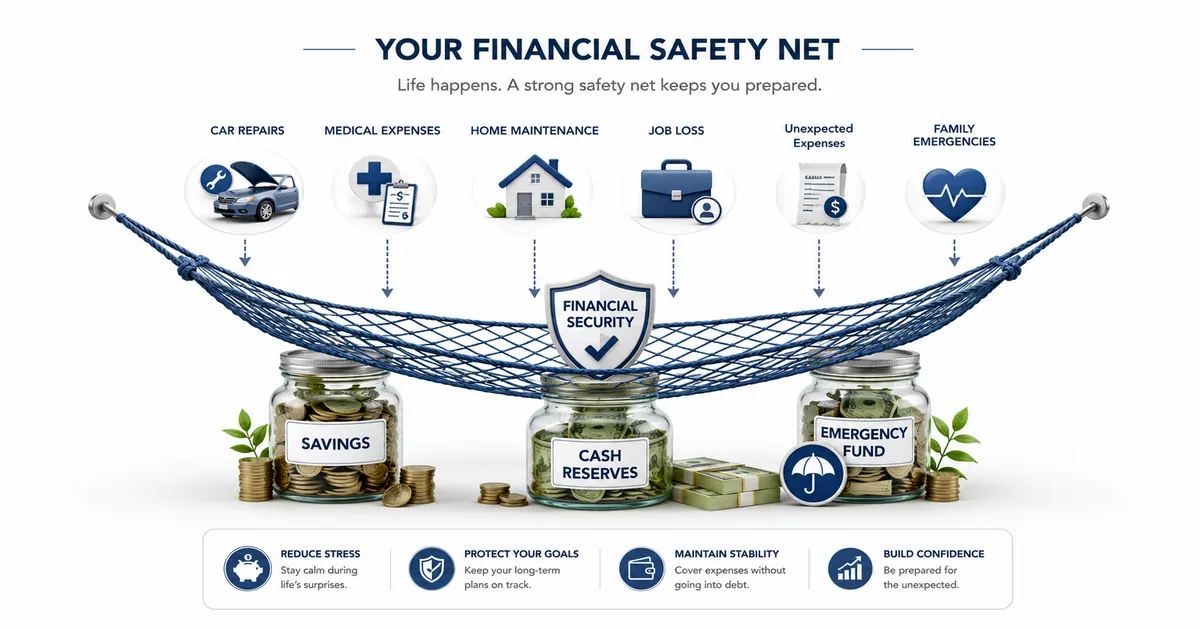
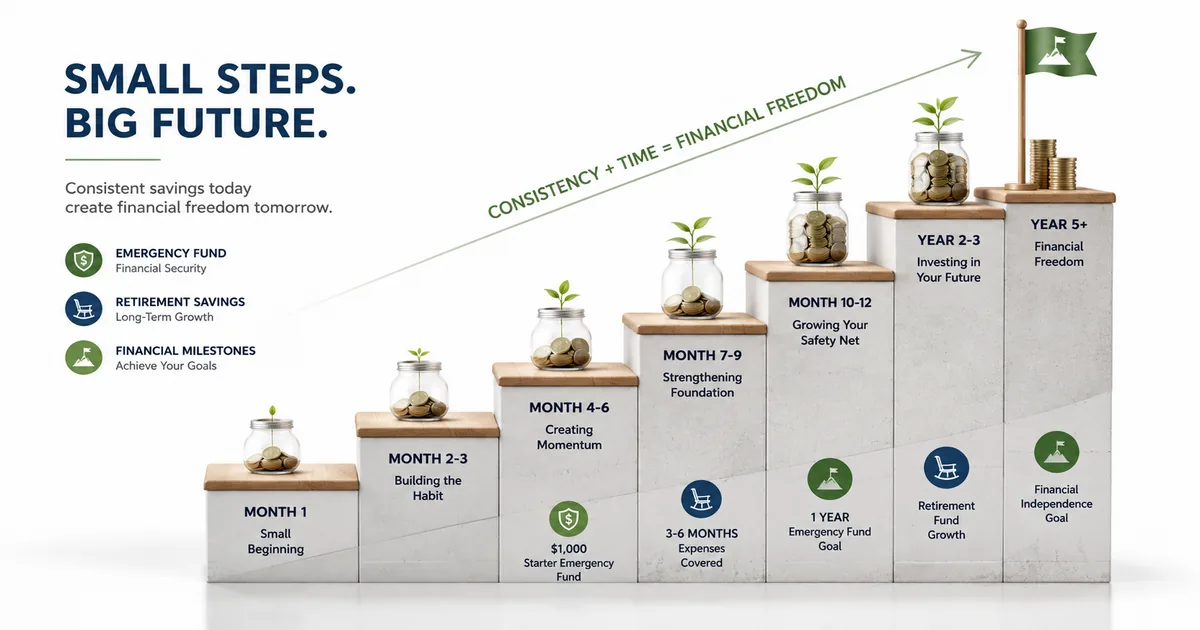
- Emergency fund ($1,000 starter). A small buffer prevents debt creation every time something goes wrong.
- Roth IRA ($7,000 in 2026, if eligible). Tax-free growth for decades — fund this before returning to the 401(k).
- Full emergency fund (3–6 months). Liquid protection for job loss or major unexpected expenses.
- Max 401(k) contributions ($23,500 in 2026). Reduce taxable income and build tax-deferred retirement wealth.
- Taxable brokerage account. Any additional savings after maxing tax-advantaged accounts.
Savings Rate Targets by Age
| Starting Age | Target Savings Rate | Why |
|---|---|---|
| 22–25 | 10–15% of gross | 40 years of compounding does the heavy lifting |
| 25–30 | 15–20% of gross | Solid trajectory for retirement by 65–67 |
| 30–35 | 20–25% of gross | Catching up requires higher rate or later retirement |
| 35–40 | 25–30% of gross | Fewer compounding years — higher rate compensates |
| 40+ | 30%+ of gross | Aggressive savings needed; consider later retirement age |
Targets assume retirement at 65–67 and 70–80% income replacement. Assumes average 7% annual investment returns. Individual circumstances vary significantly.
The Power of Starting Early — In Numbers
The most compelling argument for saving early isn't discipline — it's mathematics.
| Scenario | Monthly Savings | Years Invested | Value at 65 |
|---|---|---|---|
| Starts at 25 | $300/month | 40 years | ~$792,000 |
| Starts at 35 | $600/month | 30 years | ~$680,000 |
| Starts at 45 | $1,500/month | 20 years | ~$700,000 |
Assumes 7% annual return. The 25-year-old saves $144,000 total; the 45-year-old saves $360,000 total — 2.5× more — for a similar result. Time is the most powerful variable.
If You Can't Afford 20%
Start wherever you can and build from there. The two most effective tactics:
The 1% increase habit. When you start a new job, get a raise, or pay off a debt — immediately redirect 1% of gross income to savings before you adjust your lifestyle to the new income level. You never feel the reduction, and 1% per year compounding into savings is transformative over a decade.
Automate everything. The biggest obstacle to saving isn't income — it's that discretionary spending expands to fill available income. Automate a transfer to your savings and investment accounts on payday, before you have a chance to spend the money. Even $50/month automated is worth more than $500/month intended.
If debt is consuming money you'd otherwise save, focus on eliminating high-interest debt first. Every dollar of 20% credit card debt paid off is equivalent to a 20% guaranteed investment return. Get the employer match, pay the high-interest debt, then redirect those payments to savings once the debt is cleared.
Savings Norms in the UK, India, and Canada
UK: The UK has mandatory auto-enrolment pension contributions — a minimum of 8% of qualifying earnings (3% employer, 5% employee). This automatically gets most employed UK workers to a baseline savings rate. Financial planners typically recommend a total pension contribution of 12–15% of salary for comfortable retirement. The UK personal savings rate (as a percentage of household disposable income) has historically been 5–10% but rose significantly during the COVID period before normalising. ISA contributions (up to £20,000 per year) provide tax-free savings above pension contributions.
India: India's household savings rate is among the highest in the world — historically around 20–25% of GDP, though shifting toward financial assets from physical (gold, property). EPF mandatorily saves 12% of basic salary for salaried workers (12% employer + 12% employee = 24% of basic). PPF, NPS, and mutual fund SIPs are popular vehicles for additional voluntary saving. Financial planners in India often recommend total savings of 25–30% of income given higher inflation and more limited social security net. SEBI's investor education resources at sebi.gov.in.
Canada: Canadian financial planners typically target 10–15% of gross income for retirement, plus additional savings for other goals. CPP (Canada Pension Plan) and OAS provide a retirement income floor — meaning personal savings needs may be somewhat lower than in the US. RRSP contributions (tax-deductible, up to 18% of previous year's income) and TFSA contributions ($7,000/year) are the primary vehicles. Many Canadians are under-saving for retirement — the FCAC recommends starting retirement savings early and contributing consistently. More at canada.ca.