Diagnosing the Real Problem
Before you can fix a paycheck-to-paycheck situation, you need to know which problem you're actually solving. The solutions are different.
| Problem Type | Signs | Primary Solution |
|---|---|---|
| Spending problem | Income is adequate but money disappears; lifestyle exceeds income | Spending audit, expense reduction, budgeting system |
| Income problem | Expenses are genuinely minimal; income doesn't cover basics | Income increase — negotiation, side income, better role |
| System problem | Income is adequate, spending is reasonable, but no money is ever saved because there's no automatic mechanism | Automation — savings transfer on payday before anything else |
| Crisis cycle | Small emergencies constantly derail progress; never ahead | Build $1,000 buffer first; then address root cause |
Most households in the paycheck-to-paycheck trap have a mix of all four. But identifying the primary driver determines where to spend your energy first.
The Immediate Fix: Creating a Buffer
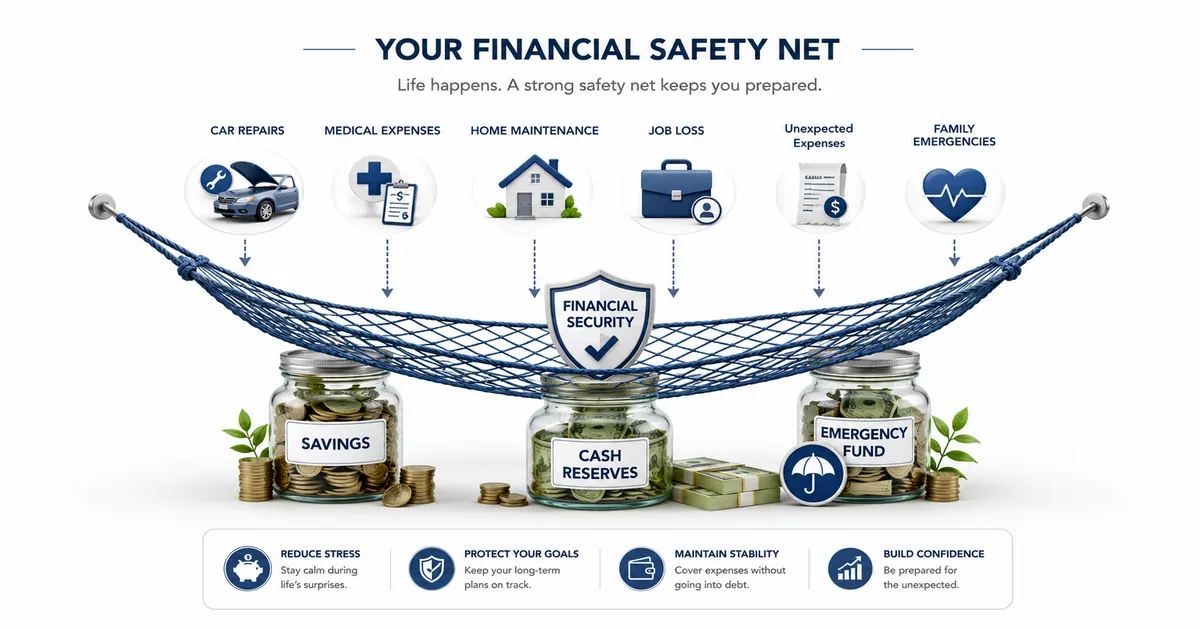
The paycheck-to-paycheck cycle has a specific mechanical problem: when your balance hits near-zero before each payday, any unexpected expense — a car repair, a medical bill, a home appliance — requires either debt or waiting, which creates stress, penalties, and often more debt.
The cycle breaks when you have a $500–$1,000 buffer that never gets touched. This sounds obvious. It's also genuinely transformative. A buffer means the next $400 car repair is an inconvenience, not a crisis. You pay it, you rebuild the buffer over the next 4–8 weeks, and you continue. The cycle of emergency-to-debt-to-barely-recovering has ended.
Getting to $1,000 is the first and most urgent goal. Everything else can wait. To get there faster: sell something (unused electronics, furniture, clothing on eBay or Facebook Marketplace), take a one-time extra shift or gig, or temporarily reduce every non-essential expense for 30–60 days to accumulate the buffer.
The Spending Audit
Pull your last three months of bank and credit card statements. Categorise every transaction. Total each category. This exercise typically reveals two to four categories where spending significantly exceeds what you'd have guessed — often food, subscriptions, or shopping.
The Five Categories That Usually Have the Most Slack
- Food and dining: The average American household spends $3,500–$5,000/year on dining out. Reducing restaurant meals by half and doing basic meal prep typically saves $200–$400/month.
- Subscriptions: Streaming, apps, gym memberships, meal kits, software. Cancel anything unused in the past 30 days. Audit quarterly.
- Shopping (Amazon, clothing, home): Online shopping creates frictionless spending. Turn off 1-click ordering. Add items to a wish list and wait 30 days before buying.
- Utilities and bills: These are often negotiable — internet, phone, insurance. A single call per year to each provider, threatening to cancel or switch, typically saves 10–20%.
- Transportation: Gas, maintenance, parking, and rideshare. For many urban households, eliminating a second car or switching to a less expensive car is the single highest-impact spending reduction.
Attacking Fixed Costs
Variable spending (food, entertainment, shopping) is easier to cut but often lower-impact per dollar. Fixed costs — rent, car payment, insurance, loan minimums — are harder to change but higher-leverage. A $300/month reduction in a fixed cost saves $3,600/year permanently.
Strategies for each:
- Housing: Get a roommate; move to a less expensive neighbourhood at next lease renewal; negotiate rent (more possible than most people think in a soft rental market)
- Car: If financing an expensive car, consider selling it and buying a reliable used car outright — this can free $400–$700/month
- Insurance: Shop all insurance annually; bundle policies for discounts; increase deductibles if you have an emergency fund
- Subscriptions and memberships: Quarterly cancellation audit
When Cutting Isn't Enough: Increasing Income
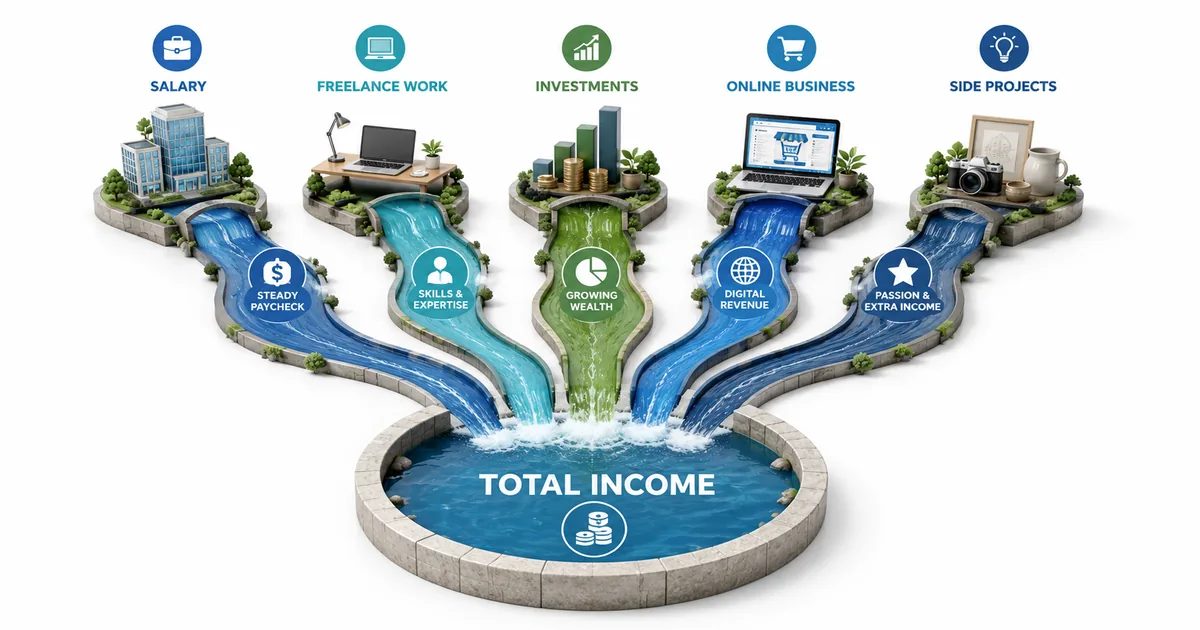
For some households — particularly those in high cost-of-living areas on modest incomes — cutting expenses reaches a floor before the budget balances. When that's the case, cutting is not the solution. Income is.
Approaches in roughly ascending effort order:
- Negotiate your current salary. The single highest-ROI income action for most employed people. Research shows most employees who ask for a raise receive one. Prepare your case with market data.
- Sell unused assets. Electronics, furniture, clothing, collectibles — a systematic sell-off of unused possessions creates a one-time cash injection.
- Temporary gig work. Rideshare driving, food delivery, task services — these can add $200–$600/month with flexible hours while you build a longer-term solution.
- Skill-based freelancing. Writing, design, coding, consulting — if you have a marketable skill, freelancing typically pays far more per hour than gig work.
- Change jobs. Switching employers typically produces a 10–20% salary increase versus staying — the cumulative impact over a career is substantial.
Automation: Removing Willpower from the Equation
The most effective personal finance behaviour change is removing decisions from the equation entirely. Willpower is a finite resource. A savings system that depends on willpower will eventually fail. A system that automating saving on payday — before you see the money — doesn't depend on willpower at all.
Setup: On payday, an automatic transfer moves a predetermined amount to a savings account immediately. You build your life around what remains. You don't decide to save each month — it just happens.
Start with any amount — even $25/payday — to establish the mechanism. Increase the amount whenever income increases. The habit, once automated, tends to grow over time as you adjust to the slightly lower available amount and then scale it up.
Break-the-Cycle Checklist
✅ The 60-Day Break-the-Cycle Checklist
The 30-Day Break-the-Cycle Plan
Week by Week
Pull 3 months of statements. Categorise all spending. Calculate available cash flow. Identify the two highest spending categories to reduce.
Sell something, pick up an extra shift, or cut every non-essential for 2 weeks to accumulate $500. Open a separate savings account. Transfer it there. Do not touch it.
Set up an automatic transfer from checking to savings on payday. Any amount. Cancel unused subscriptions. Reduce food spending by cooking three more meals at home this week.
Call your internet provider and insurance companies. Negotiate. If you have a high car payment, calculate the financial impact of selling and downgrading. Decide whether to act.
By the end of 30 days, you should have a $500–$1,000 buffer, one automatic savings transfer running, and at least two identified expense reductions. That's meaningful progress, not a complete solution.