The Needs vs Wants Distinction
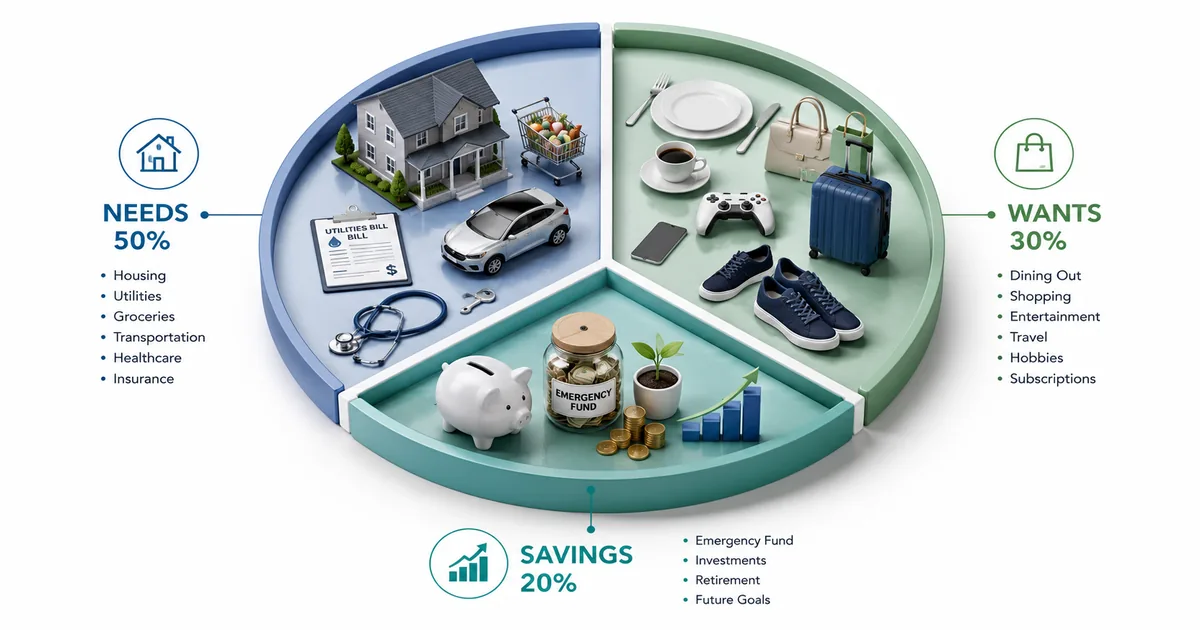
The canonical definition is simple: a need is something you must have to survive and function — food, shelter, healthcare, transportation to work. A want is everything else — a new phone when the old one works, a streaming subscription, a restaurant meal, a holiday.
This definition is useful as far as it goes. But it breaks down almost immediately in practice, because the real world doesn't present spending decisions as neat binaries. You need housing — but how much housing? You need a car in many cities — but does it need to be a new one? You need to eat — but does lunch need to cost $18 at a restaurant?
The binary framing also creates a false morality around spending — as though wanting things is inherently irresponsible. It isn't. The goal isn't to want nothing. The goal is to spend in ways that reflect your values and don't compromise your financial security.
The Grey Zone — Where Most Decisions Live
Most financially significant spending decisions don't live at the extremes. Nobody debates whether to buy food or whether to buy a private jet. The real decisions are in the middle:
- $1,200/month apartment vs $2,400/month apartment in the same city
- A reliable used car vs a new car with financing
- Cooking most meals at home vs eating out regularly
- State university vs private university
- A $40 gym membership vs a $180/month premium club
None of these is obviously a need or a want. They're gradations — the question isn't whether to spend, but how much.
| Category | Clear Need | Grey Zone | Clear Want |
|---|---|---|---|
| Housing | Safe, adequate shelter | Larger home in a better neighbourhood | Second home; vacation property |
| Transportation | Reliable transport to work | New vs used; car brand choice | Sports car; second vehicle for convenience |
| Food | Sufficient calories and nutrition | Restaurant meals; food quality upgrades | Fine dining; premium delivery services |
| Technology | Functional phone and computer for work | Latest model upgrade; premium tier | Multiple devices; gadgets with limited use |
| Clothing | Adequate, weather-appropriate clothing | Brand preference; wardrobe expansion | Designer labels; excessive accumulation |
The Most Dangerous Category: Inflated Essentials
The most financially damaging spending pattern isn't wasting money on obvious luxuries — most people know a $600 dinner is a splurge. The real damage comes from overpaying for things that feel like needs but contain substantial want embedded within them.
Housing: The most common example. You need housing. But in most cities, there's a vast range between minimum-adequate housing and expensive housing. Many households spend 35–45% of take-home income on housing when 25–30% is more appropriate. On a $70,000 income, that difference is $7,000–$10,000/year — the equivalent of a fully funded Roth IRA contribution.
Cars: The average new car payment in the US is approximately $735/month (2025). A reliable used car purchased outright or with a small loan costs a fraction of that. The gap — $400–600/month — invested from age 30 becomes approximately $600,000–$900,000 by retirement. The choice of car is one of the highest-leverage financial decisions most people make, disguised as a practical transportation decision.
Education: The college choice — state school vs private university for a degree with similar employment outcomes — can represent a $100,000–$200,000 difference in student loan burden. This is a want disguised as an investment.
The Spending Decision Framework
For any significant spending decision (generally $200+ or any recurring monthly cost), run through this framework before committing:
The 4-Question Spending Framework
Not "can I make the payment?" — can I pay for this without borrowing, without reducing savings, and without stress? If it requires debt, it's a want you can't afford, regardless of how it feels.
Every dollar spent is a dollar not going somewhere else. A $600/month car replaces $600 of debt payoff, savings, investing, or other spending. Name what you're trading away.
Consumer psychology research consistently shows that anticipated pleasure exceeds actual pleasure for most purchases. A 30-day wait on non-essential purchases significantly reduces impulse buying without reducing satisfaction.
If your stated priority is saving for a home down payment in three years but you're buying a $45,000 car on credit, your spending doesn't align with your priorities. Integrity between stated and actual spending behaviour is where financial progress happens.
Values-Based Spending: A Better Question
The needs vs wants framework is ultimately a blunt instrument. A more useful question is: does this spending reflect what I actually value? The values-based approach reframes the conversation from restriction to intention.
Someone who genuinely values travel and experiences should spend generously on those things — while cutting back on categories they don't particularly care about (a premium car, for example). Someone who values home and entertaining should have a beautiful home and spend on cooking — and cut elsewhere. The point is not to spend less overall. It's to spend on things that actually matter to you and spend less on things that don't.
Most people, when they honestly review their spending, discover significant money going to categories they don't actually care much about — and too little going to what they genuinely value. The audit itself is the intervention.
Three Practical Tests Before Any Purchase
The 10/10/10 Rule: How will I feel about this purchase in 10 minutes? 10 months? 10 years? Purchases that you'll regret at 10 months or 10 years are wants that feel like needs in the moment.
The Opportunity Cost Test: What could this money do instead? $200 spent on a subscription you barely use is $200 not going to your emergency fund, your credit card, or your investment account. Name the trade-off explicitly.
The Reverse Regret Test: At the end of your life, will you regret spending this money? Or will you regret not spending it? This test is particularly useful for experiences — travel, family time, meaningful events — where the regret calculus often runs the other direction.
The Spending Decision Checklist
✅ Run This Before Any Purchase Over $200
If you can check all boxes: proceed. If you can't check the affordability boxes: don't buy it. If you can't check value boxes: wait 30 days and revisit.
Common Spending Mistakes
- Treating convenience as a need. Food delivery is not a need — it's a highly effective want disguised as convenience. At $15–$25 per meal above home cooking, daily delivery habits cost $3,000–$6,000/year.
- Recurring subscriptions that accumulate invisibly. The average household has 12–15 paid subscriptions. Review all of them quarterly. Cancel anything you haven't used in 30 days.
- Social comparison driving spending decisions. Buying to match or exceed neighbours, colleagues, and friends is one of the oldest sources of financial self-destruction. What others spend tells you about their priorities and their situation — neither of which has any relevance to yours.
- Conflating quality with price. Expensive things are not always better. A $25 pan often outlasts a $200 pan. A $2,500 laptop does not produce better work than a $900 model for most users. Evaluate what you actually need from a product before paying a premium.
- Sunk cost spending. "I've already paid for the streaming service, so I should watch something" leads to hours of low-value entertainment. The money is already spent. Future decisions should be based on value from this moment forward — not on recovering past spending.