How Zero-Based Budgeting Works
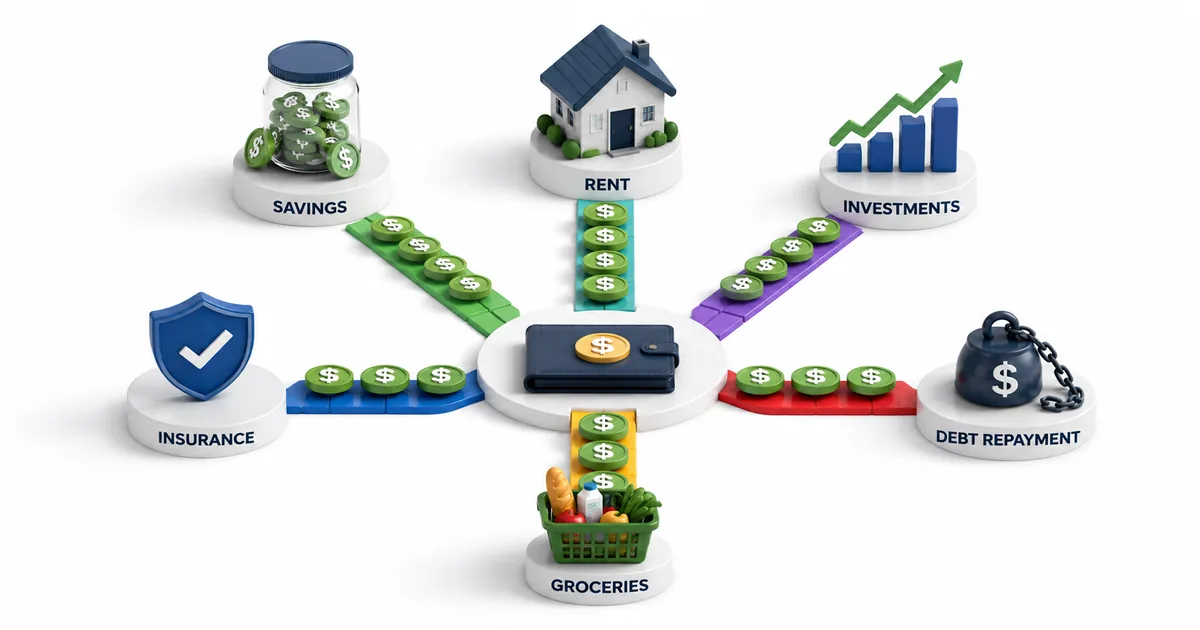
The term "zero-based" comes from the accounting world, where it means building a budget from scratch each period rather than adjusting last year's numbers. In personal finance, it means starting each month with your income and deliberately allocating every dollar to a category until you reach zero.
The key mental shift: savings and investments are not what's left over after spending. They're deliberate allocations that come first. In a zero-based budget, "Roth IRA contribution: $583" and "Emergency fund: $300" appear as line items alongside rent and groceries. All of them are allocations with a purpose — some fund your present life, some fund your future.
At the end of the month, you compare what you allocated versus what you actually spent in each category. Any unspent money in a spending category is intentionally reallocated — to savings, to next month's buffer, or to an upcoming irregular expense — rather than drifting into untracked spending.
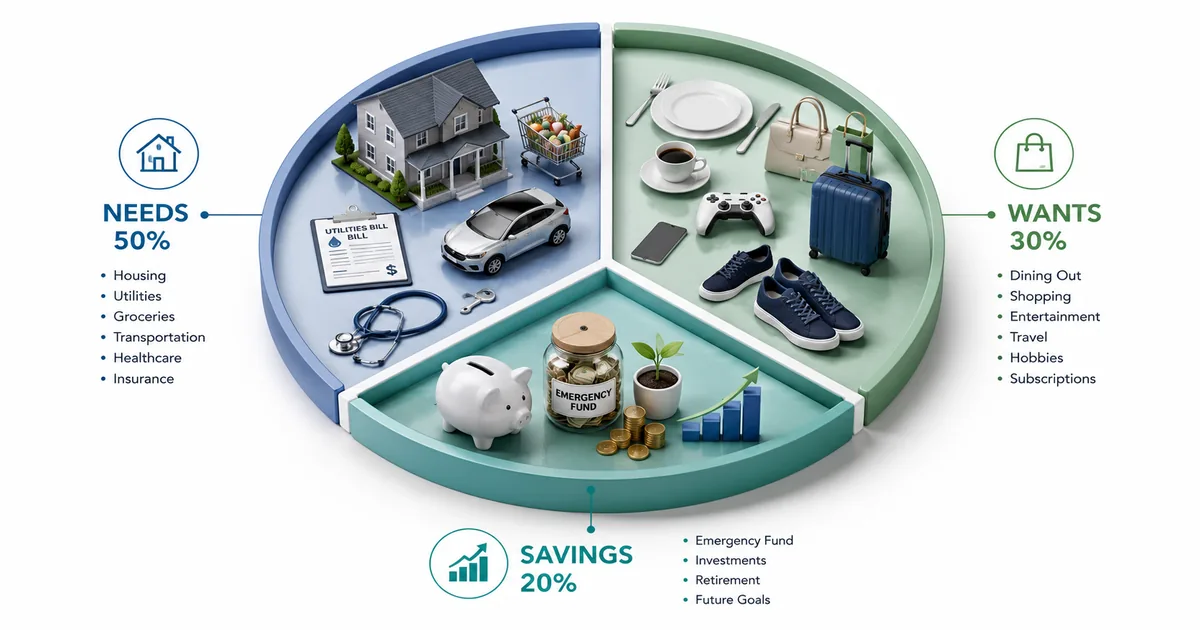
ZBB vs the 50/30/20 Rule
| Feature | 50/30/20 Rule | Zero-Based Budget |
|---|---|---|
| Level of detail | 3 broad categories | Line-item for every expense |
| Monthly time required | ~5 minutes | 30–60 min setup + weekly check-ins |
| Visibility | Shows category balance | Shows exactly where every dollar goes |
| Flexibility | High — categories are loose | Lower — requires conscious reallocation |
| Best for | People who want a simple system | People who want maximum control or are in debt payoff mode |
| Savings discipline | Good — savings is its own category | Excellent — savings is a named allocation, not leftover |
How to Set One Up
Step 1 — Calculate your monthly take-home income. Use the lower end if it varies. Include all reliable income sources.
Step 2 — List every expense category. Include fixed expenses (rent, insurance, subscriptions), variable necessities (groceries, fuel, utilities), irregular expenses (car registration, medical copays — average monthly), savings allocations, and debt payments.
Step 3 — Assign a dollar amount to every category. Start with fixed expenses, then work through variable costs using realistic estimates from the past 2–3 months. Assign savings and investment amounts next. What's left over after all necessities and savings goes to discretionary categories.
Step 4 — Adjust until income minus all allocations equals zero. If you're over, cut discretionary categories. If you're under, allocate the surplus to savings, extra debt payment, or a sinking fund — don't leave dollars unassigned.
Step 5 — Track spending against allocations weekly. A brief 5-minute weekly check-in (how much of each category have I used?) catches overspending early enough to adjust, rather than discovering it at month-end.
The buffer month strategy: The hardest part of zero-based budgeting for variable income is uncertainty — you don't know exactly what you'll earn. The solution: build a one-month buffer. Once you have one month's expenses in a dedicated buffer account, you budget the previous month's known income for this month. Variable income stops being a problem because you're always spending known, past income.
Common Budget Categories
A typical zero-based budget includes:
- Housing: Rent or mortgage, property taxes, HOA fees, renter's/homeowner's insurance
- Utilities: Electricity, gas, water, internet, phone
- Groceries: Separate from dining out — important to track separately
- Transportation: Car payment, insurance, fuel, public transit, parking
- Health: Insurance premium (if not pre-tax), prescriptions, copays, gym
- Debt payments: Minimum payments plus any extra allocated to payoff
- Savings allocations: Emergency fund, specific goals (house, car, holiday)
- Investments: Roth IRA, taxable brokerage contributions
- Dining and entertainment: Restaurants, bars, events, streaming services
- Personal: Clothing, haircuts, personal care
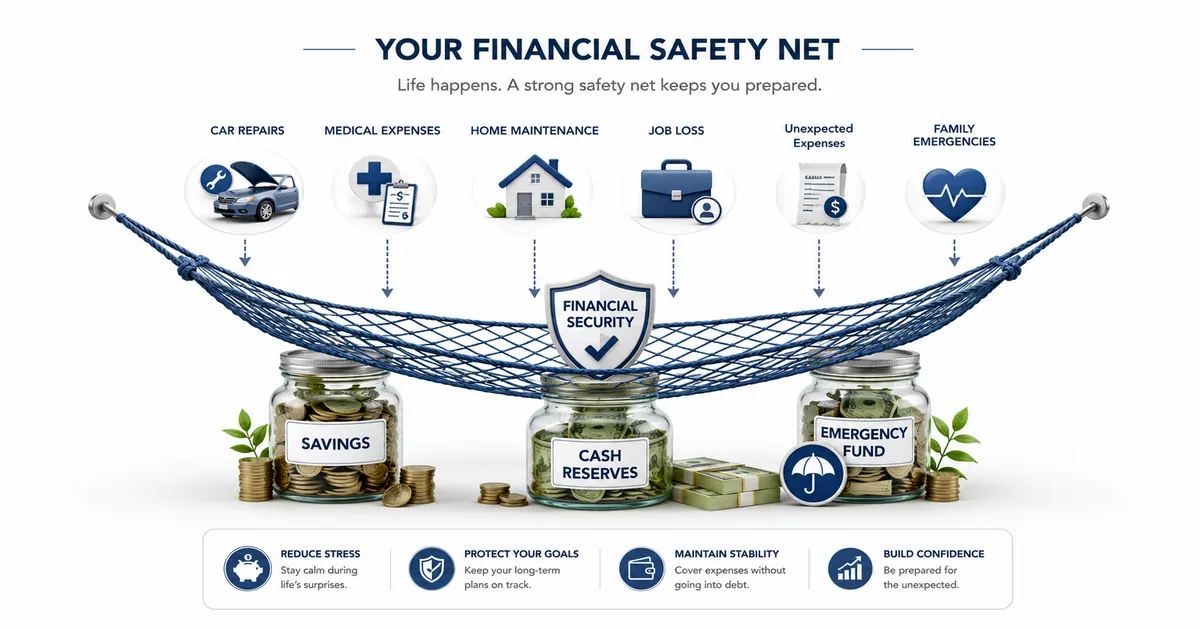
- Sinking funds: Car maintenance, home repairs, annual subscriptions, gifts, holidays
- Miscellaneous buffer: A small category ($50–$100) for things you forgot to categorise
Who It Works Best For
Zero-based budgeting isn't for everyone. It's most effective for:
- People in aggressive debt payoff mode. Knowing exactly where every dollar goes makes it easier to find and redirect spending to debt payments.
- People who feel money disappears. If you frequently reach the end of the month wondering where your paycheck went, ZBB provides the answer and the fix.
- Income transitions. New job, pay cut, significant expense change — ZBB provides the control needed during adjustment periods.
- Couples aligning on finances. The explicit allocation process creates a shared monthly conversation about priorities rather than parallel spending patterns.
It's less suited for people who already have strong financial habits, high savings rates, and low financial stress — for them, the extra time investment may not be worth the marginal improvement over a simpler system.
Tools That Help
A spreadsheet works — set up two columns (allocated vs actual) for each category. Google Sheets or Excel with a simple template is free and fully customisable.
YNAB (You Need a Budget) is the most popular dedicated zero-based budgeting app, built entirely around this methodology. It has a learning curve but implements the buffer month concept and category tracking natively. Subscription-based at around $15/month or $99/year.
EveryDollar (from Ramsey Solutions) is a simpler free option that follows zero-based principles without YNAB's complexity. A premium version adds automatic bank syncing.
Budgeting Approaches in the UK, India, and Canada
UK: Zero-based budgeting is gaining popularity in the UK, driven partly by the cost-of-living pressures since 2022. The principles are identical — allocate every pound of take-home pay to a category. The main UK-specific consideration is building sinking funds for irregular but predictable UK expenses: council tax (sometimes paid over 10 months), car MOT, annual boiler service, and TV licence. MoneyHelper has free budgeting tools at moneyhelper.org.uk.
India: In India, zero-based budgeting works well for salaried individuals with monthly income. Key India-specific categories: EMI payments (treat like any fixed expense allocation), SIP investments (automate and include as a top-priority allocation), festival and family obligation funds (sinking fund category for Diwali, weddings, etc.), and domestic help costs. The informal expense economy — cash spending on vegetables, local transport, small vendors — requires a "miscellaneous cash" category with honest tracking. SEBI's financial literacy resources at sebi.gov.in.
Canada: Canadian zero-based budgeting follows the same framework. Notable Canada-specific considerations: provincial health premium (in some provinces), RRSP/TFSA contribution allocations, and seasonal heating cost variability in winter. The FCAC budget planner at canada.ca is a free online tool that works on similar principles.